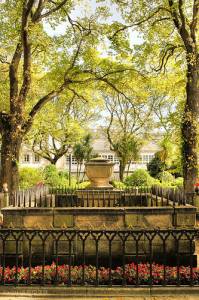
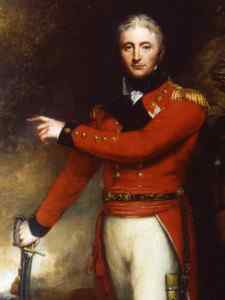
|
¡Cuan lonxe, canto, das escuras niebras,
dos verdes pinos, das ferventes olas
que o nacer viron!...dos paternos lares,
do ceo da patria que o alumou mimoso,
dos sitios, ¡ai! do seu querer, ¡que lexos!...
viu a caer, baixo enemigo golpe
pra nunca máis se levantar, ¡coitado!
¡Morrer asín en estranxeiras plaias,
morrer tan mozo, abandona-la vida
non farto aínda de vivir e ansiando
gustar da froita que coidado houbera!
¡I en vez das ponlas do loureiro altivo
que do heroe a testa varonil coroan,
baixar á tomba silenciosa e muda!...
¡Ouh brancos cisnes das britanas islas,
ouh arboredos que bordás galanos
dos mansos ríos as ribeiras verdes
i os frescos campos donde John correra!...
Se a vós amargo xemidor sospiro
chegou daquel que no postreiro alento
vos dixo ¡adios! con amorosas ansias
a vós volvendo o pensamento último,
que da súa mente se escapaba inxele,
¡Con que pesar, con que dolor sin nome,
con que estrañeza sin igual diríades
tamén ¡adios! ó que tan lonxe, tanto,
da patria, soio, a eternidás baixaba!
I o gran sillón, a colgadura inmóbil
do para sempre abandonado leito;
a cinza fría do fogar sin lume,
a branda alfombra que leal conserva
do pé do morto unha sinal visibre,
o can que agarda polo dono ausente
i o busca errante por camiños ermos,
as altas herbas da alameda escura
por onde el antes con solás paseaba,
o sempre igual mormoruxar da fonte
donde el nas tardes a sentarse iña...
¡Cal falarían sin parar de Moore,
co seu calado afrixidor lenguaxe,
ós ollos, ¡ai!, dos que por el choraban!
¡Xa nunca máis...xa nunca máis, ¡ouh!, triste,
ha de volver, onde por el esperan!
Parteu valente, a combatir con groria.
¡Parteu, parteu!...e non tornou, que a morte
segouno alí nos estranxeiros campos,
cal frol que cae onde a semilla súa
terra n'atopa en que arraigar poidera.
Lonxe caíche, pobre John, da tomba
onde cos teus en descansar pensaras.
En terra allea inda os teus restos dormen
i os que te amaron e recordan inda,
mirando as ondas do velado Oceano,
doridos din, desde as nativas praias:
-¡Aló está el, tras dese mar bravío;
aló quedou, quisais, quisais por sempre;
tomba onde naide vai chorar, cobexa
amadas cinzas do que nós perdemos!...
I os tristes ventos i as caladas brisas
que os mortos aman si lexanos dormen
do patrio chan, a refrescarte veñen
do vran na noite calorosa, e traen
pra ti nas alas cariñosas queixas,
brandos suspiros, amorosos ecos,
algunha bágoa sin secar, que molla
a seca pedra do mausoleo frío,
do teu país algún perfume agreste.
¡Mais que fermosa e sin igual morada
lle coupo en sorte ós teus mortales restos!...
¡Quixera Dios que para ti non fora
nobre estranxeiro habitación allea!...
Que n'hai poeta, ensoñador esprito
non pode haber que ó contemprar no outono
o mar de seca amarillenta folla
que o teu mausoleo con amor cobexa;
que ó contemprar nas alboradas frescas
do mes de Maio as sonrosadas luces
que alegres sempre a visitarche venen,
non diga: «¡Asín cando eu morrer, poidera
dormir en paz neste xardín frorido,
preto do mar.. do cimeterio lonxe!...»
Que ti n'escoitas enjamás, ¡ouh, Moore!
Choros amargos, queixumbrosos rezos,
ni-os outros mortos a chamarte veñen,
pra que con eles na calada noite
a incerta danza dos sepulcros bailes.
Só doce alento do cogollo que abre,
da frol que mucha o postrimeiro adiose,
loucos rebuldos, infantiles risas
de lindos nenos que a esconderse veñen
sin medo a ti tras do sepulcro branco.
I algunha vez, ¡moitas quizais!, sospiros
de ardente amor que o vento leva donde
Dios sabe só...por sin igual compaña
dichoso tés na habitación postreira.
¡I o mar, o mar, o bravo mar que ruxe
cal ruxe aquel que te arrolou na cuna,
mora onda ti, vén a bicar as pedras
dun chan de amor que con amor te garda,
i arredor teu deixa crece-las rosas!...
¡Descansa en paz, descansa en paz, ouh, Moore!
E vós que o amás, do voso honor celosos,
fillos de Albión, permanecei tranquilos.
Terra fidalga é nosa terra—tanto
cal linda Dios a quixo dar—, ben sabe
honra facer a quen merece honra,
i honrado así, cal mereceu, foi Moore.
Soio n'está no seu sepulcro; un puebro
co seu respeto compasivo véla
polo estranxeiro a quen traidora morte
fixo fincar lonxe dos seus, i a alleos
vir a pedir o derradeiro asilo.
Cando do mar atravesés as ondas
i ó voso irmán a visitar vaiades,
poñé na tomba o cariñoso oído,
e se sentís rebuligar as cinzas
e se escoitás indefinibres voces
e se entendés o que esas voces digan,
a ialma vosa sentirá consolo.
¡El vos dirá que arrededor do mundo
tomba mellor que a que atopou n'achara
sinón dos seus antre o amoroso abrigo!
|
How far—how far from the gloomy fogs,
From the green pines, from the seething waves
That saw him born! From the ancestral estates,
From the homeland's sky that caressed him with its light,
From the places alas! he cherished, how far...!
Came he to fall 'neath the enemy's blow
To never more rise, ill-starred!
Thus to perish on alien strands,
To die so young, to leave life behind
Unfilled still of living and eager
To taste the fruit he would have tended!
And instead of the proud laurel wreath
That crowns the hero's manly head
To descend to the mute and silent grave...!
O white swans of the British Isles,
O copses that embroider courtly
The green banks of the tame rivers
And the fresh fields where John used to run!
If to you reached bitter the mournful sigh,
The parting thought of his transparent mind
Which sped to you
Bidding good-bye! with anxiety
And love entwined in the dying gasp—
With what heartache, with what inexpressible sorrow,
With what unmatched surprise you too must have said
Good-bye! to him who so distant, far-flung
From the homeland, lonesome sank into eternity!
And the throne armchair, the unstirring curtain
Of the forever-relinquished bed,
The cold cinders of the unlit hearth,
The soft carpet that faithfully preserves
The visible print of the departed's footstep,
The dog that listens for the absent master
And seeks him out by errant untilled tracks,
The tall grasses of the shady boulevard
Where he used to stroll for solace,
The unvarying murmur of the spring
Beside which he'd sit in the afternoons...
How they would speak unceasingly of Moore
With their silent grieving language
To the eyes of those who for him were weeping!
Nevermore—nevermore alas! will he sad
Return to the place where they expect him!
He departed bold to strive for glory,
He left, he left...! And did not return
For death cut him low on foreign fields
Like the flower falls whose seed
Finds no earth to root on.
Poor John, you fell far from the tomb
Where you thought to rest with your own.
Your remains yet repose on foreign land
And they who loved you and remember still
On gazing upon the waves of the mistéd Ocean
Say pained from the native shore,
"He lies over there beyond this unruly sea,
There he was abandoned, perhaps...perhaps forever.
A grave that no one weeps over shelters
The beloved ashes of the one we lost...!"
And the mournful winds and the silent breezes
(Delight of the dead who slumber far removed
From the native turf) arrive to refresh you
In the summer's hot night and bring
On their wings tender plaints,
Soft sighs, loving echoes,
An undried teardrop that bedews
The arid stone of the chilled sarcophagus,
Some sylvan perfume from your country.
Yet what unparalleled gorgeous abode
Fate bestowed on your mortal remains!
Would it please God that it weren't for you,
Noble stranger, an alien dwelling!
For no poet or dreamer can there be
Who beholding in autumn
The sea of sere, yellowish leaf
That your mausoleum hosts lovingly—
Who watching in the cool dawns
Of the month of May the rosy lights
That come to visit you cheerily—
Says not, "Thus, when I die, would I
Sleep peaceably in this flowerful garden
By the sea...remote from a graveyard!"
O Moore! You never hear
Bitter sobs or plaintive prayers
Nor do other dead come in the quiet night
Calling on you to join them
In the uncertain dance of the sepulchres.
Yours only the sweet breath of blooming buds,
A withering flower's parting good-bye,
The mad scamper and boisterous laughter
Of pretty children who come fearlessly
To hide behind the white sepulchre
And at times—many perhaps!—the sighs
Of burning love which the wind hauls away
To God only knows where...have you—fortunate one—
For unrivalled company in your last dwelling.
And the sea—the sea—the swollen sea that roars
As roars that other one which lulled you in the cradle—
Dwells here and washes ashore to kiss the stones
Of a land of love that watches over you fondly
And lets the roses about you burgeon...!
Rest in peace, rest in peace o Moore!
And you who love him, zealous for your honour,
Sons of Albion, rest at ease.
Our land is a land of country squires—as chivalrous
As it is pretty by God's brimming desire—
That well knows how to honour they who deserve it
And therefore honoured as he deserved was Moore.
He does not lie forsaken in his sepulchre;
A people cares with compassionate respect
For the foreigner whom treacherous death
Forced to stay far removed from his own
And to strangers come solicit the final haven.
When you cross over the waves of the sea
And you travel to visit your brother
Press your ear to the tomb tenderly
And should you feel the ashes stirring—
Should you hear unfamiliar voices
And grasp what they are saying—
Your soul will be comforted.
He will tell you that nowhere in the world
Could he have found a better resting place
But among his own by their loving embrace!
|